
Somerville Mold Testing in a Shared Cellar
One assessment covering the whole building tells every household the same thing at once, which is usually what unsticks a shared cellar.
Mold Testing quote in Somerville
Tell us what you can see, where the water came from, and whether anything is still wet. That is usually enough for us to say which trade you need, and whether the job is small enough to handle yourself, before anyone comes out.
Would you rather talk it through? Call (315) 640-3590, answered 24/7.
$100 off your first job
Credited by us on your first booked job.
- One credit per customer per property, on your first booked job.
- Valid through December 31, 2026.
Mention this offer when you book. Full terms.
Somerville's claim file and its two outfalls

FEMA's NFIP claims dataset records only six flood insurance claims for the City of Somerville, with loss years from 1995 to 2021 and about $86,000 in net payments. All six were rated in flood zone X and all six were on properties with an unfinished basement or enclosure.
Source: Federal Emergency Management Agency, OpenFEMA NFIP Redacted Claims v2, accessed 2026-09-14
The City of Somerville states that the majority of Somerville is served by a combined sewer system, that it owns two combined sewer overflow outfalls, SOM-001A discharging to the Alewife Brook and SOM-007A/MWRA205A discharging to the Mystic River, and that overflow structures exist to release excess flow to a water body and prevent it backing up into buildings or out of manholes.
Source: City of Somerville, Massachusetts, accessed 2026-09-14
In the National Weather Service Boston dew point climatology for Boston Logan Airport, the average daily dew point is 60F or higher on every day from July 7 through August 23, a run of 48 consecutive days.
Source: NOAA National Weather Service, Boston/Norton forecast office, accessed 2026-09-14
Zone X, unfinished cellars, and one combined pipe
All six flood insurance claims ever paid in this city were rated in flood zone X and every one of them was on a property with an unfinished basement or enclosure. That tells you the water here is not a river rising, it is the pipe. The city says the majority of Somerville is served by a combined sewer and that it owns two overflow outfalls, one to the Alewife Brook and one to the Mystic, and those structures exist to release excess flow to a water body rather than let it back up into buildings. So testing has to separate three candidates that leave an identical mark on a cellar wall: pressure in that combined line, groundwater through the footing, and summer air condensing on cold masonry.
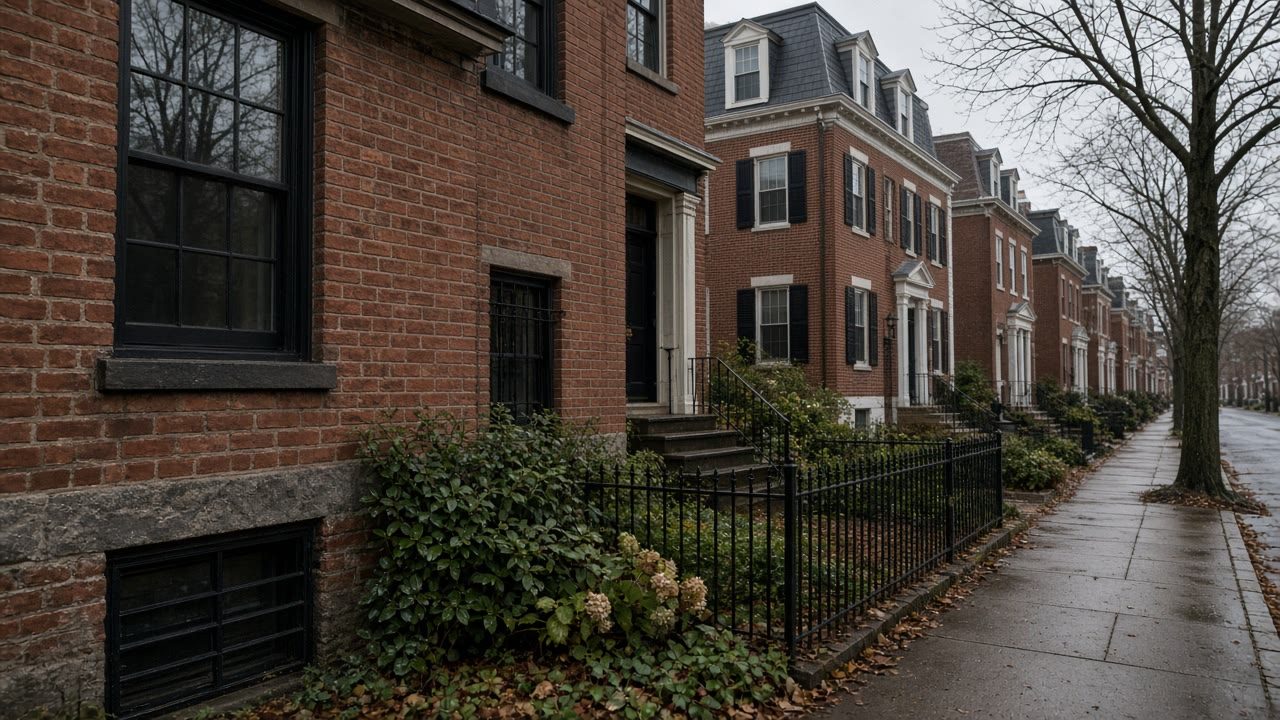
What a Somerville three-decker report has to settle
In a two or three family the useful question is not whether there is mold. It is which part of the building it belongs to, and that is a question a written scope answers and a phone call does not. Ask for one document covering the whole cellar rather than one unit, with the readings, the measured area and dated photographs in it, because three households each recalling a different conversation is how a shared repair stalls for a season. And if the stain turns out to be dry, small and sitting on painted masonry, we will tell you that it needs a dehumidifier and better airflow rather than a report and a crew.
Three sources that look the same on a wall
Combined sewer pressure, groundwater through the footing and condensation on cold masonry all stain alike. Meters and a thermal scan separate them; a look does not.
One document for the whole building
With 55.2 percent of this city's units in two to four unit structures, a report scoped to one apartment settles nothing. Scope it to the cellar and every unit above it.
Whether the owner lives there
Where they do not, the written scope and the photographs are the only protection on either side, because the consumer contracting statute does not reach the building at all.
Two units, one cellar, no agreement?
A single written scope with readings in it usually ends that conversation.
Removal and drying once the Somerville source is known
What Somerville tenants ask before a test is booked
The landlord says it is condensation, not mold. Who is right?
Possibly both. The average daily dew point at Logan is 60F or higher on every day from July 7 through August 23, a run of 48 days, so a cool cellar wall genuinely does condense water out of ordinary summer air. But condensation that keeps material wet is still a moisture defect, and meter readings on the wall and the air settle the argument in an hour.
Do we need a separate test for each apartment?
No. One assessment covering the cellar and the rooms actually affected is cheaper and more useful, because the source is almost always below everyone. We record it room by room so each household can see what applies to them.
Tell us which floor smells worst
We will say whether the source is the pipe, the ground or the air.